
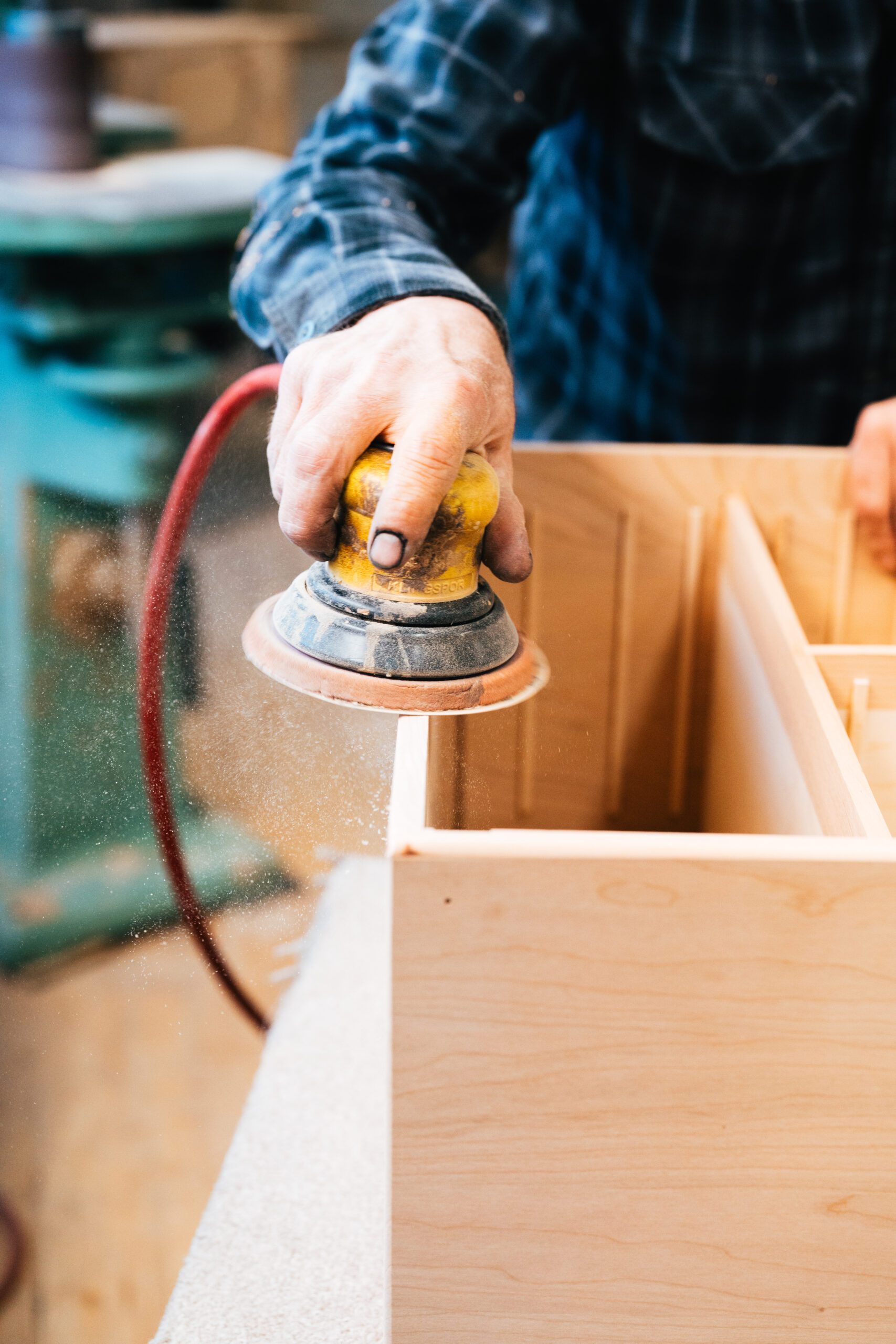
Step into an American engine plant circa 1915 and you’d sense the pulse of national ambition. Heavy mills bellowed, lathes hissed, and machinists, those quiet masters of precision, turned raw metal into possibility. From bridges to bombers, the first half of the 20th century was, in many ways, a machinist’s century. Their craft was the silent architecture of mass production, of automotive expansion, of war effort, and of peace-time progress. And the ultimate mark of mastering their skill? A well-worn Gerstner & Sons tool chest.

From Shop Floor to National Backbone
In the American workshops of the 19th and early 20th centuries, machining was a fiercely disciplined craft. Young apprentices learned by doing, guided by senior hands, mastering tolerances and repeatability. But as the economy scaled, the industry needed a shared language, parts had to be interchangeable, tolerances predictable, and production reliable.
One of the turning points came in the late 1800s when engineer William Sellers proposed a national standard for screw threads. His standard allowed machine shops nationwide to produce interchangeable parts more confidently, a foundation for mass manufacturing. Mass production meant industries scaled very quickly, suddenly model makers, aeronautics engineers, automotive designers, jewelry makers, gunsmiths, and even dentists all were using Gerstner & Sons chests to keep them organized.
In hubs like Dayton, Providence, and Cincinnati, small tool firms and machinists’ shops fueled one another: a local furnace, a local foundry, a bushing maker, and a milling shop. Some made a single part, some completed final assemblies. Together, they formed an ecosystem that transformed machining from boutique craft into industrial infrastructure.
Machinists as Builders, and Founders
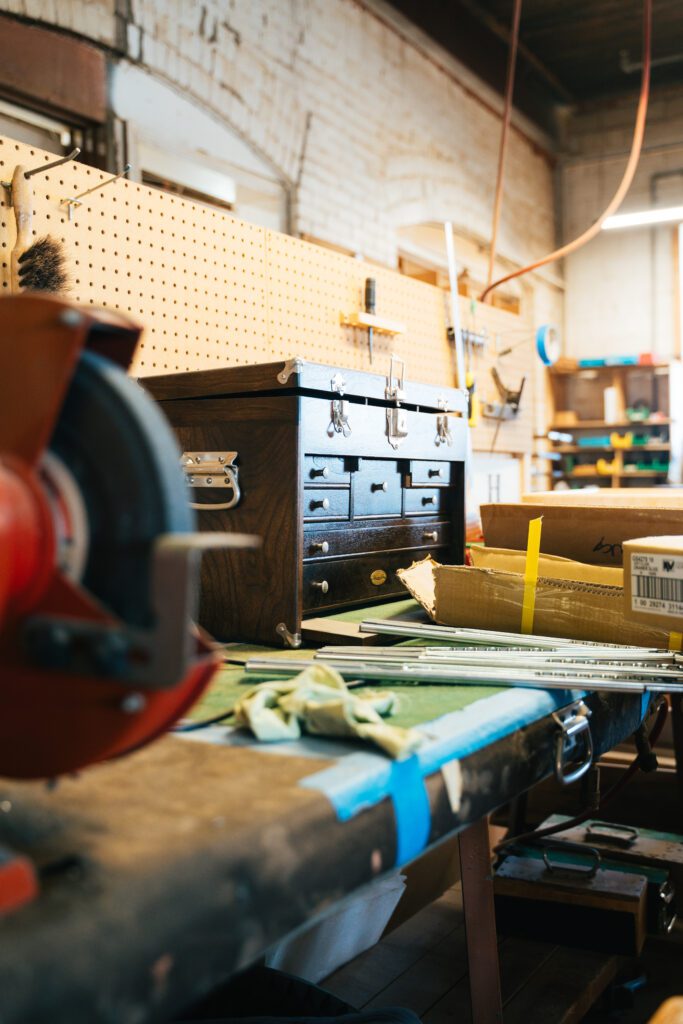
Many of the titans of American industry began life at the workbench. Henry Martyn Leland, for example, started as a machinist’s apprentice and eventually founded Cadillac and Lincoln. His devotion to micrometer-level tolerances became part of the American ideal of automotive precision. Laroy Sunderland Starrett was not a “shop machinist” in a factory but an inventor and toolmaker who changed the industry. In 1880, he founded the L. S. Starrett Company to manufacture precision measuring instruments: squares, calipers, micrometers, and other gauges, tools that you would find in a Gerstner & Sons tool chest.
Then there was Eldridge R. Johnson, who started his career as a machinist and tinkerer working for the Berliner Gramophone Company. In 1901 he struck out on his own founding the Victor Talking Machine Company, producing phonographs and records, which would later become part of RCA in 1929.
Machinists were also organizers. In 1888, nineteen machinists gathered in an Atlanta locomotive pit and formed what would become the International Association of Machinists (IAM). By World War I, the union claimed roughly 300,000 members, a testament to how indispensable precision work had become to national strategy and industry.
And even as machinists powered factories, America built the machines they used. During WWII alone, American shops produced an estimated 800,000 machine tools, enabling the surge in aircraft, tanks, and munitions that many historians argue tipped the scales in the Allies’ favor.
The Chest Where Tools Lived
Long before powered flight was routine, Harry Gerstner was at his bench in Dayton. A pattern maker by trade, he spent his free time designing a wooden tool chest for his own precision tools. The result was so fine that he built a second and a third, eventually selling what became the first Gerstner chests in 1906. Gerstner & Sons weathered the great Dayton flood of 1913, rebuilt, and by 1914, Gerstner opened a new factory on the same footprint the firm occupies today.
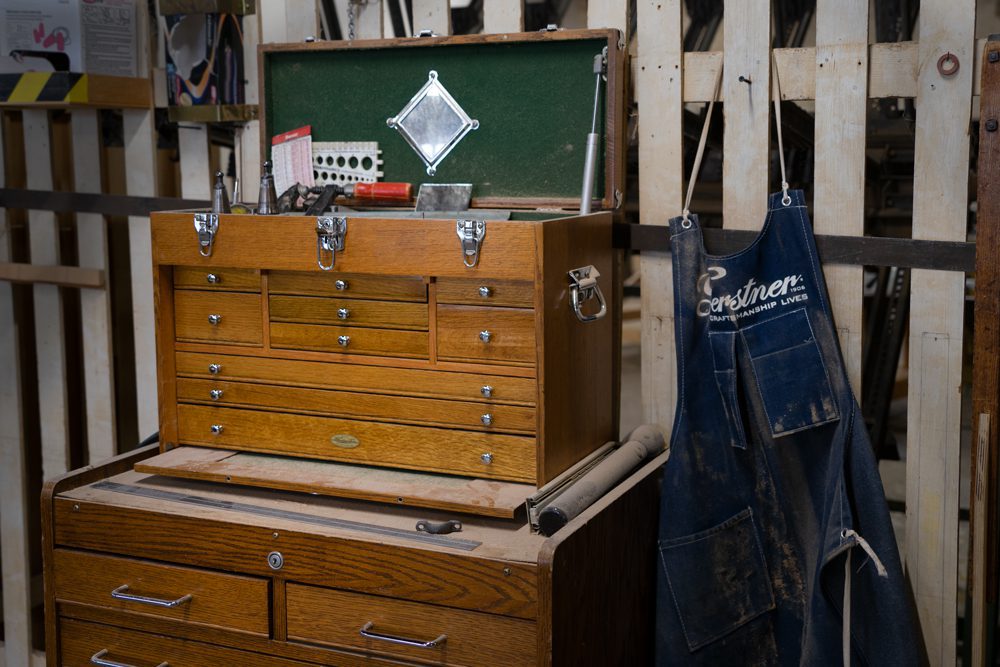
Suppose you happen to find a vintage Gerstner & Sons chest and slide open one of those drawers. In that case, you are looking into a microcosm of the bench world: drawers of micrometers, gauges, test bars, feeler shims, and in the center, a cavity sized to hold Machinery’s Handbook. The famed Model 52 journeyman chest was designed so that its central drawer would accommodate that very reference.
Gerstner chests were originally made in oak, though later models included cherry and walnut. Their design evolved: a sliding cover that becomes a felt work surface, drawers that you can lift and carry bench-side, and fine catches and locks stamped “Gerstner & Dayton-O.” Over the decades, Gerstner & Sons maintained continuity. Even today, Gerstner chests are produced in the same factory and to the same exacting standard.

Why Legacy Matters
From 1900 to the mid-century, the machinists’ and modelmakers’ craft translated sketches into reality. Building the modern world by hand, long before computer-aided drafting and 3D printing. In a time when a Gerstner chest gave those workmen’s tools more than a home, they gave it a symbol of achievement. If you walked into a job interview with a Gerstner & Sons chest, you could count on getting a job. A Gerstner showed that you weren’t just anyone; you had reached the top of your craft.
“The men (and women) who built America” is more than a rhetorical flourish. It’s literal. Their discipline, specificity, and relentlessness powered a nation on the move. Today, when you see a restorers’ shop, an airplane hangar, or an aerospace lab with a green-felt-lined oak chest on their bench, that’s not nostalgia; it’s a symbol that quality and craftsmanship never go out of style.
