
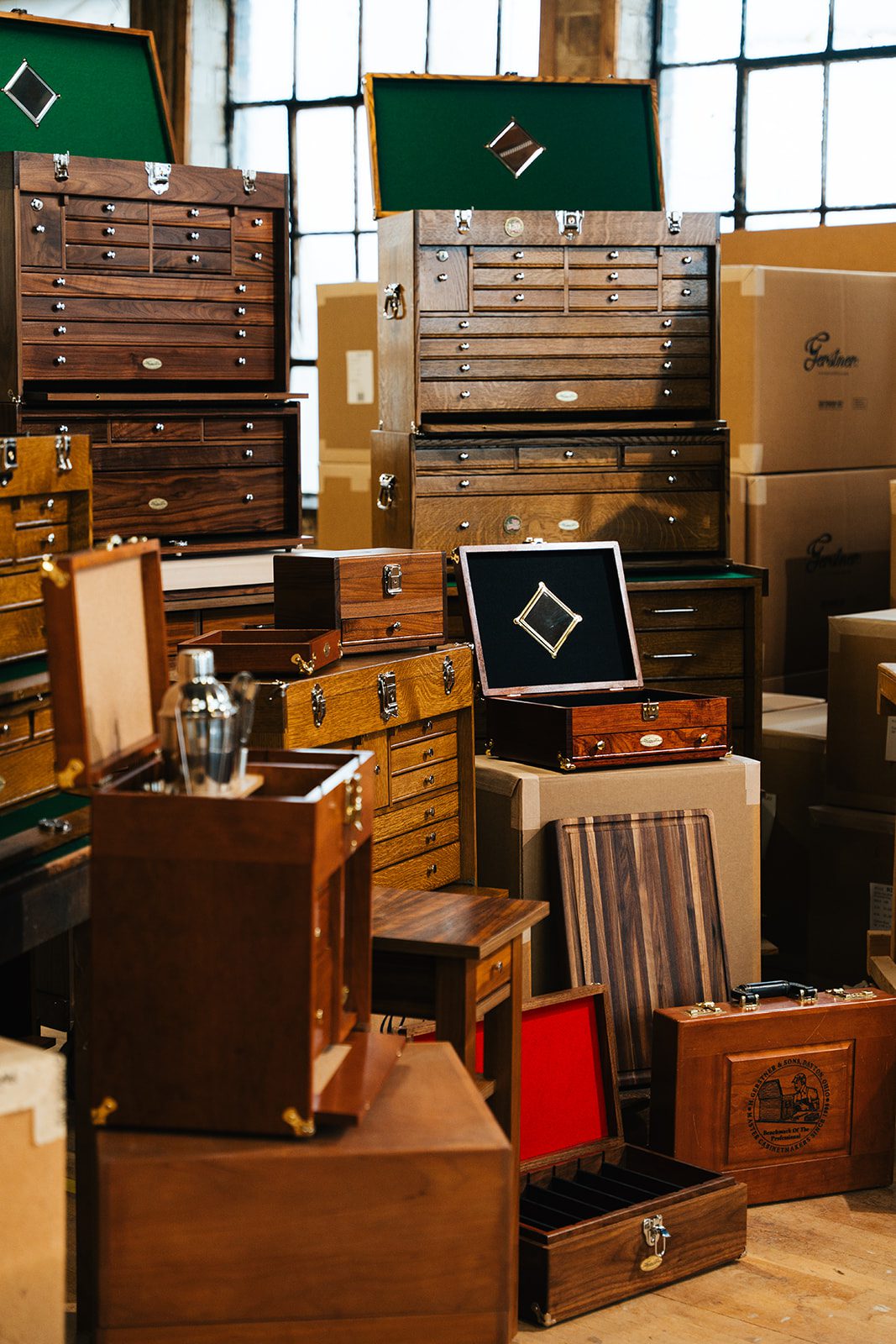
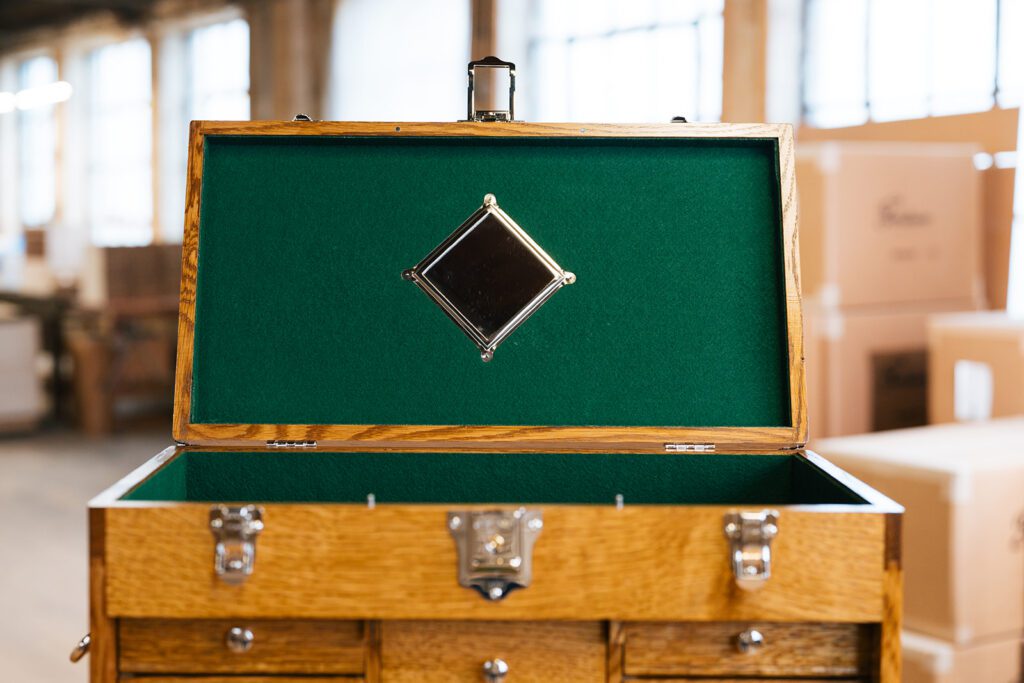
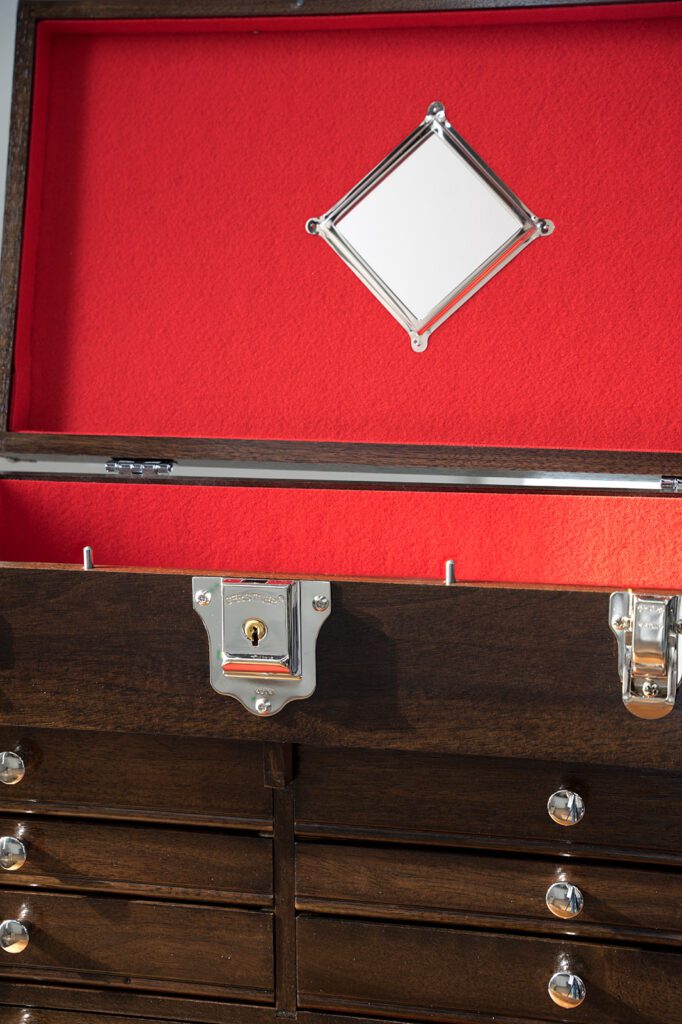
When you see a wooden Gerstner tool chest, you probably recognize the signature diamond-shaped mirror tucked beneath the lid. It adds a distinctive touch to the chest. But why is it there?
Over the years, three stories have helped explain this unusual feature. Each story offers a glimpse into the world of the working machinist when Harry Gerstner first began making tool chests in Dayton, Ohio, in 1906.
A Mirror to Keep an Eye on the Boss
Imagine standing at your Gerstner chest, carefully arranging your tools before getting back to work. You are focused on the job in front of you. But what if the boss is walking up behind you?
According to one shop-floor story, the mirror offered a handy way to see who was approaching without turning around. A quick glance could reveal whether the supervisor was coming your way.
It is a humorous explanation, but it fits the working culture of the early 1900s. Skilled machinists took pride in their work and their tools. They also worked in shops where supervisors kept production moving and expected employees to stay on task.
Harry Gerstner understood the needs of these craftsmen. Before founding his company, he worked as a pattern maker. He knew the value of precision tools and the importance of keeping them organized and close at hand.
In 1906, he used a $100 bonus from his woodworking apprenticeship to start H. Gerstner & Sons. He built wooden chests designed to protect the valuable tools that craftsmen relied on every day.
A Practical Feature in the Machine Shop
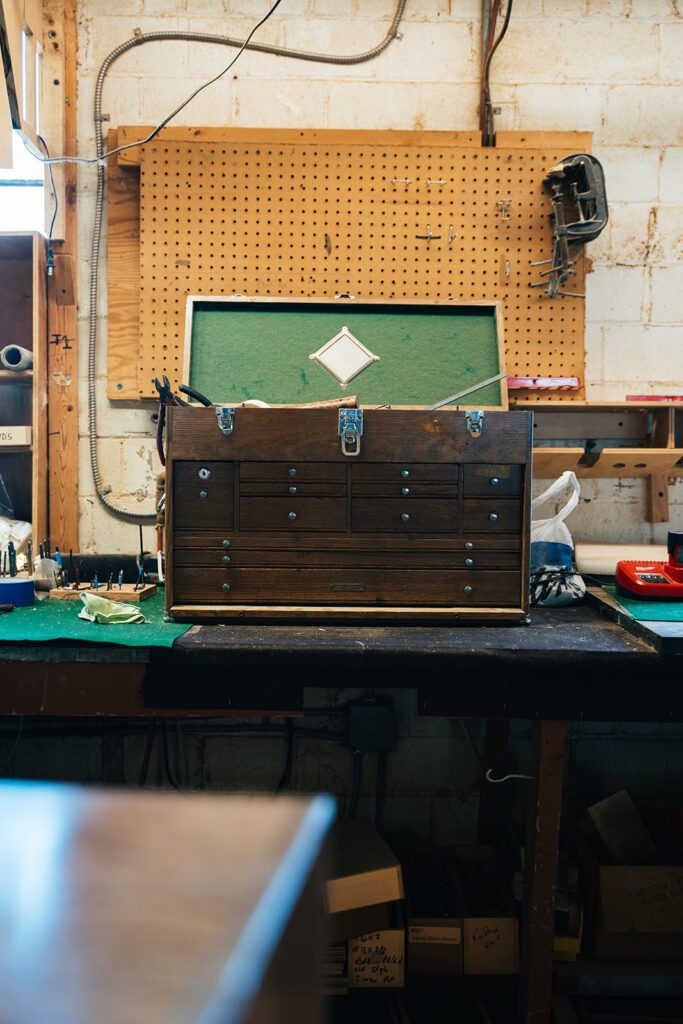
Early machinists worked around lathes, milling machines, and other equipment that cut and shaped metal. These operations could send tiny metal chips and sharp fragments into the air.
Today, workplace safety standards require appropriate eye protection when flying particles pose a hazard. In the early 1900s, however, workers had far fewer formal protections and safety requirements.
The story reflects a real problem in the machine shop. Metal chips could cause serious eye injuries, and a mirror could help a worker see what was happening.
Whether or not this was the original reason for the mirror, the story connects the feature to the demanding conditions machinists faced in the early days of precision manufacturing.
Looking Presentable Before Heading Home
The third explanation is a little more personal.
At the end of a long shift, a machinist might have metal dust on his clothing, grease on his hands, and a smudge on his face. Before heading home to his family, he might appreciate a quick look in the mirror.
A glance could help him check his appearance and clean up before leaving the shop. It was a small convenience at the end of a hard day’s work.
This story also fits the pride that skilled craftsmen placed in their work and themselves. A machinist’s tools represented years of training and a significant personal investment. A well-kept tool chest showed that he valued his equipment. Looking presentable reflected that same sense of pride.
Harry Gerstner built his reputation by understanding what working craftsmen needed. His chests were not simply boxes for storing tools. They were carefully designed companions for people who valued precision, organization, and quality.
The mirror may have served a practical purpose, a personal one, or perhaps all three.
A Small Detail With a Lasting Story
There is one important piece of history to keep in mind. Gerstner is a 4th generation family business and these stories have been passed down from Harry to his Sons-in-law to his Grandson and now Great Grandson.
What know is that Harry designed his chests around the needs of precision craftsmen. His guiding principle was simple: a place for everything and everything in its place.
More than 120 years after the company began, Gerstner still builds wooden tool chests in Dayton, Ohio. The diamond mirror remains a recognizable detail that invites questions and keeps the stories of the machine shop alive.
So the next time you open a Gerstner chest, take a moment to look at that little mirror. Whatever its original purpose, this small feature reminds us that the best designs often carry more than one story.